
Hi dear friend.
I keep a calendar for my death. Sounds morbid? Yep I understand why you’d might think that. 😊 It doesn’t have a date circled in red. Mine is quieter than that, every Monday, I draw a cross over the week that’s gone. One diagonal, over the seven days I’ll never get back. Then I go make breakfast.
I don’t do it to feel sad, I do it to be here. To be more present in the now, and to be truly grateful for the day I’m actually in instead of the imaginary hundreds I assume are coming. That’s the whole reason. The cross isn’t about death, really. It’s about the morning I’m standing in when I draw it.
I should admit something that makes people tilt their heads at dinner, I actually love this stuff. I like thinking about death. I like talking about it, it’s one of my favourite conversations, the one most people spend a whole life politely steering around. And in some strange corner of myself, I even look forward to it, the way you might look forward to a country you’ve heard about forever and never visited. None of which means I want to leave early. I absolutely love being alive, that’s the part that might confuse you.
But the looking forward and the loving-it-here aren’t in a fight. They feed each other. Knowing there’s a last page is exactly what makes me read this one so slowly.
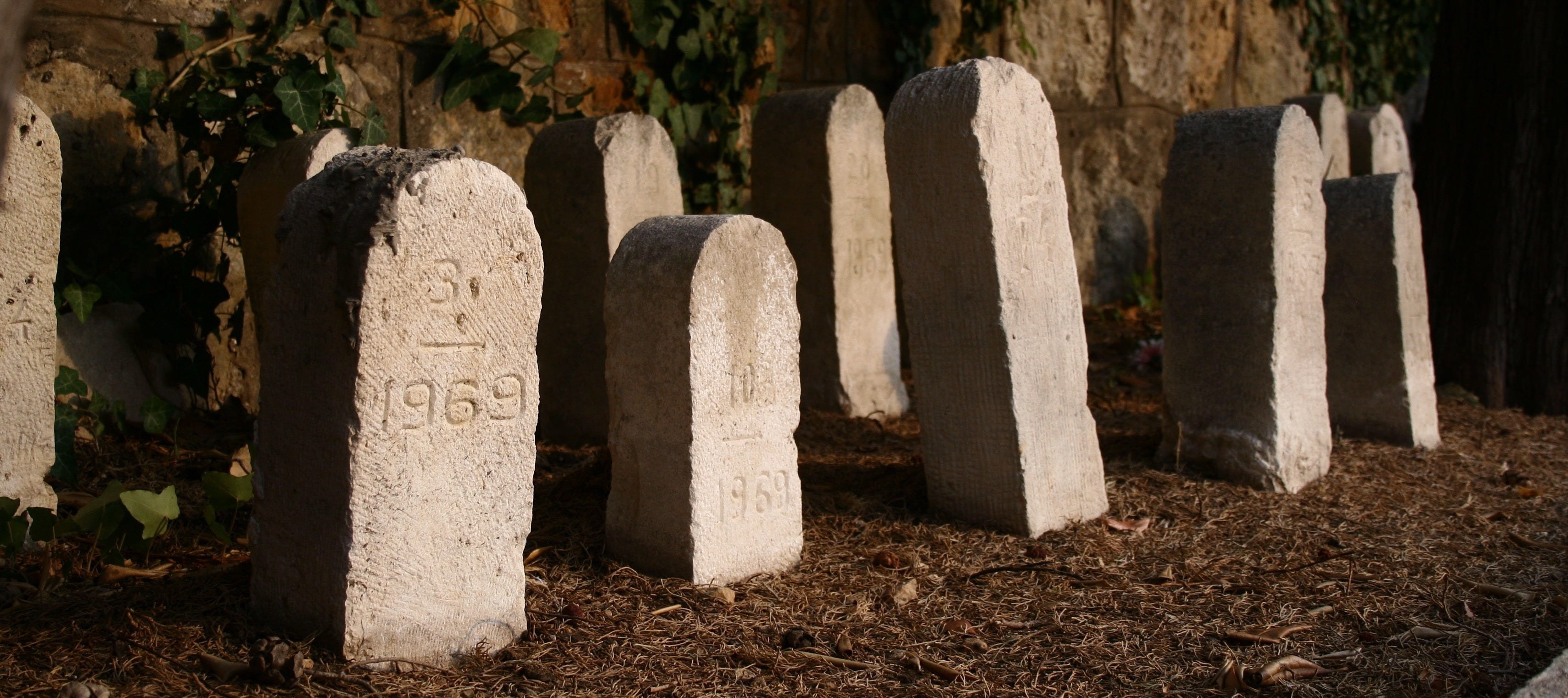
The idea is old and embarassingly simple. Take a moment, I take one cross, once a week and use it to remember my body is mortal. There’s no app to download, though there are several, and there’s no certification. You just look at the fact and keep living. People have been doing versions of this forever. Monks ring bells, stoics kept a phrase handy, the Victorians photographed their dead and hung the pictures in the hall. I cross over a week. We’re all doing the same thing, refusing to let the biggest fact of our lives slip quietly into the background.
What a death calendar actually is
A “death calendar” isn’t one thing. It’s a category of small tricks for keeping mortality in view. Pick whichever annoys you least.
The plainest version is a recurring day, the first of the month, your birthday, the anniversary of someone you lost. Something that repeats. On that day you stop and do the numbers. You are this old. The average life is roughly this long. That’s the gap. You don’t have to be grim about it. You just look.
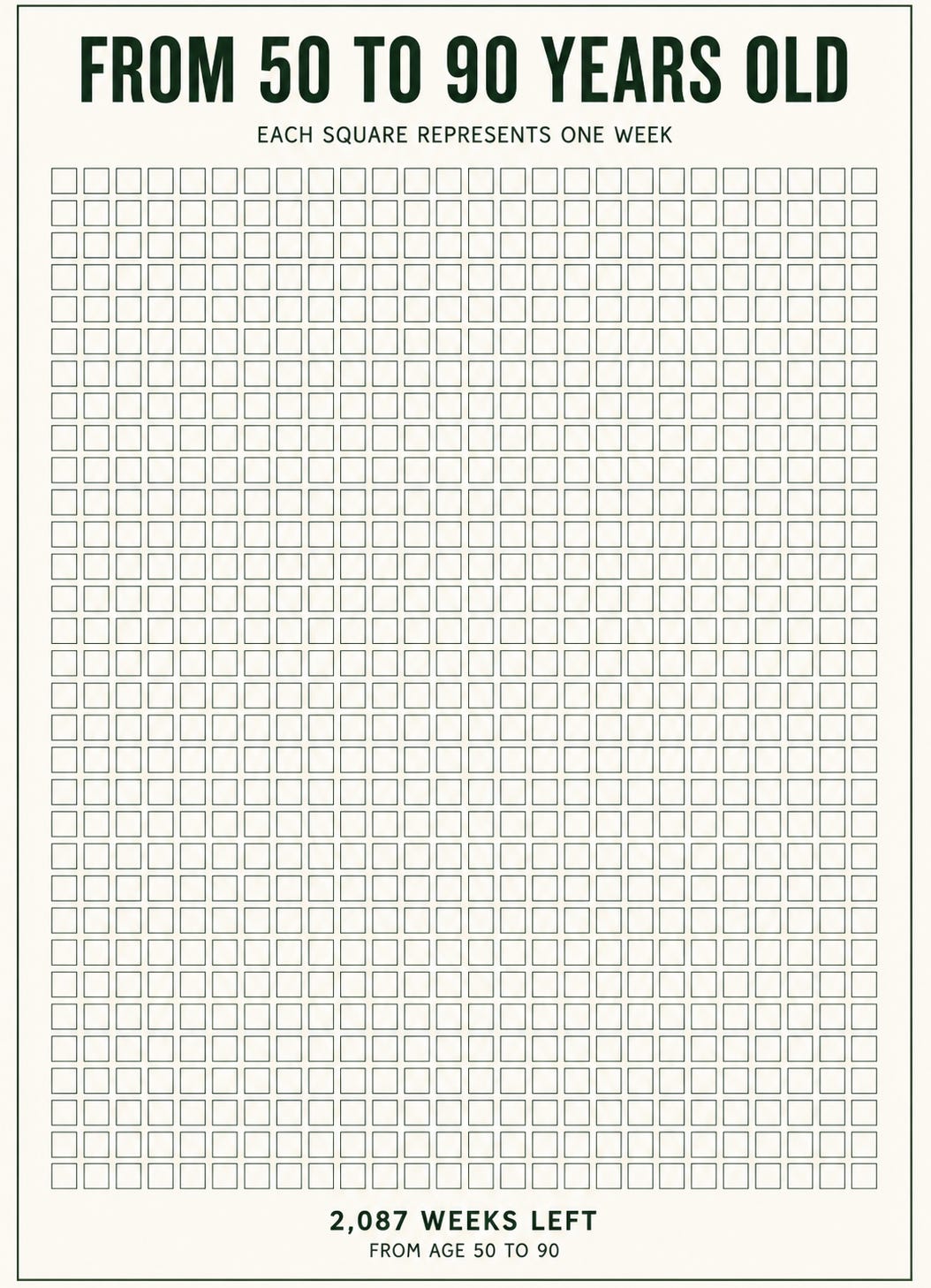
Mine is the whole-life grid, run weekly. You’ve probably seen the grid, a page of little boxes, one per week, four thousand or so if you’re lucky. I don’t shade them, I cross them, one cross each Monday over the week just spent. It’s more confronting than a birthday, because a birthday lets you round up and a grid does not. The crossed-out part is gone. The empty part is a guess. And a week is the right unit for me, a day feels too small to notice losing, a year too big to feel. A week I feel.
An example here from 50-90 years.
Then there’s the daily nudge, the buzz on your phone that says, in effect, don’t forget, this ends. I’ve used one. It’s useful and slightly ridiculous, which is true of most useful things.
The point they all share isn’t the format. It’s the appointment, deciding, in advance, to remember the thing you’re built to forget.
Why I do it
Because forgetting is the default, and the default runs my life whether I notice or not.
I didn’t come to this through a book, though there are good ones. I came to it in Bali, where death is not tucked away. When there’s a cremation a Ngaben it’s not a hushed thing behind closed doors. It’s a procession, a crowd, a tower carried through the street, sometimes a genuine party. The body is burned in the open and the ashes go to the sea. The first time I watched it, I realized how strange my own arrangements were by comparison, how much effort goes, back home, into never quite seeing the thing happen.
Living near that does something to me. It doesn’t make me morbid, it makes me a little more awake to the calendar I’m already on, the real one, the one that doesn’t reset in January. My cross each Monday is just a way of keeping a little of that openess in a life that would otherwise let me pretend I have unlimited weeks.
And what it gives back isn’t grief. It’s gratitude. When I remember the weeks are counted, I stop skimming the day I’m in. I notice it, I’m slower to waste an afternoon being annoyed, quicker to be thankful for an ordinary one. That’s the trade the cross makes for me: a small drop in the stomach on Monday, in exchange for being genuinely, un-distractedly here for the six days after it.
Drink your tea slowly and reverently, as if it is the axis on which the world revolves. — Thích Nhất Hạnh
How to keep one without it becoming a wellness project
I want to head off the version of this that turns into a self-improvement chore, because that’s the version that quietly kills it. If your death calendar sprouts a habit-tracker and a color-coded mood log, you’ve missed the point and built yourself another small anxiety. The practice is supposed to subtract, not add.
So, I keep it light. Here’s what actually works for me.
One mark, one moment, repeating. For me it’s a cross over the past week, every Monday, no words, no journaling, just the cross and the second of noticing it. That’s the entire system. Whatever mark you choose, make it one you can do in seconds, or you won’t do it.
Keep it where you’ll see it, not where you’ll archive it. Mine is on the fridge in the kitchen, so I pass it many times a day. The graveyard of good practices is the beautiful dedicated journal you bought and used twice.
Let it be short. The temptation is to turn it into a whole reflective ritual, and the week I make it a ritual is the week I start dreading it and then skipping it. I draw the cross, feel the small drop in my stomach, and go live. The looking is the practice. The living is the point.
And let it be occasionaly funny. Mortality isn’t only a solemn subject. Half of what I notice when I actually look is how much of my worry is nonsense, I’ll be embarrassed to have carried. A death calendar that never makes me laugh at myself isn’t working. It’s just a fancier way of being scared.

The part I can’t sell you
I’ll stop short of the promise the genre usually makes here, that this will transform you, that you’ll live every day like it’s your last, that you’ll finally become the person you meant to be. I won’t, and neither will you. I forget again by Thursday. I waste afternoons, the calendar doesn’t fix that, nothing fixes that, because forgetting isn’t a flaw in the system, it IS the system, and the practice is just the small repeated act of remembering anyway.
That’s really all a death calendar is. A reminder I get to give myself, over and over, that the weeks are counted even though I don’t get to see the number. Monday comes. I draw the cross. I remember, briefly, that I’m alive and that this won’t last. And then, this is the good part, I go and be grateful for the day I’m actually in.
So no, I’m not afraid of the last cross. I think about it, I talk about it, and in my odd way I’m a little curious about it. But that’s precisely why I’m in no hurry, because loving where you’re going is the surest way I know to fall completely in love with where you already are. The grid on my fridge isn’t counting me down. It’s reminding me, one week at a time, how good it is to still be here in this brutiful life.
Until next time, stay curious and grateful.
Light and joys,
Kim
The meaning of life is just to be alive. It is so plain and so obvious and so simple.
— Alan Watts
Death without Christ simply leads to the second death. In Christ one already lives in eternity but outside of Christ we are dead in trespasses and sins and have no hope.