
Hi dear one,
Before my feet touch the floor each morning, I lie quietly and list what I’m grateful for, letting it move through me like prayer beads. Sometimes it’s quick, other mornings it lingers, because there is more than I can count.
Yesterday it was running water. We lost it for a day due to flooding, no drama, just inconvenience, but when it returned, I realised how easily we forget what sustains us, clean water, pressure in the tap, the invisible systems we depend on. Gratitude sharpens perspective.
Outside, the world looks almost unchanged, the same trees in our garden, the same sky, the same soft rhythm of life continuing.
And then I open my laptop, and suddenly I’m in another climate entirely.
AI headlines. AI breakthroughs. AI replacing this. AI disrupting that. And underneath it all, the comments.
Two camps.
One says: This is the end. It’s anti human. Anti-Christ. Anti-soul. It will kill us all.
The other says: This is progress. It’s evolution. Use it. Build with it. Don’t fall behind.
Black and white. But the deeper reality? It’s grey, and grey requires maturity.
I Understand the Fear
If you feel worried about AI, I get it. It moves fast. It sounds confident even when it’s wrong. It threatens jobs, identity, and stability. It can feel like something built by people at the top that the rest of us didn’t vote for or trust.
That’s not irrational. That’s human.
We’ve always feared what we don’t understand. When radio first arrived, people thought it would corrupt society. When television came, it would rot the brain. When the internet came, it would destroy real relationships. We’ve been here before, just not at this speed.
But let’s stop calling it a tool. A tool waits for you to use it; this doesn’t wait. AI is already inside the systems that run your money, your health, your information, your world. You were never asked. It was never optional. It simply arrived.
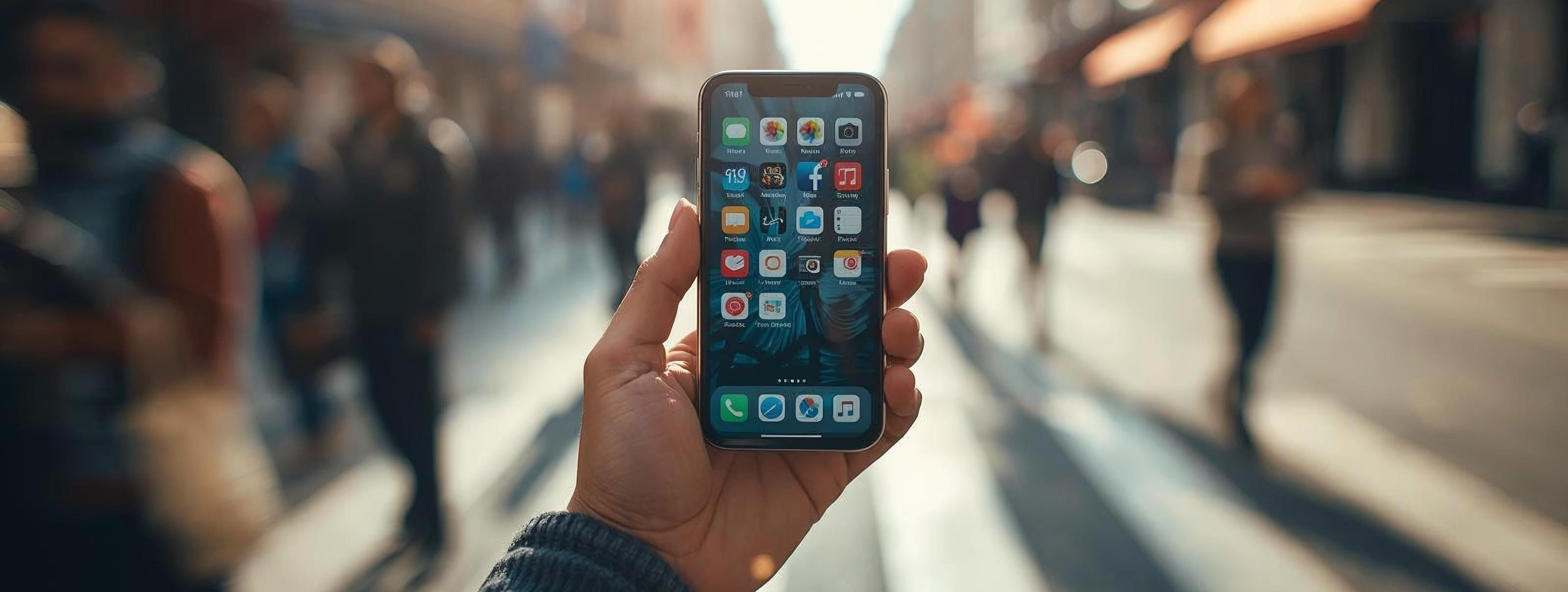
If you use your phone, you are already living inside it: spam filters, GPS maps, autocorrect, face recognition, search results, recommendations, fraud detection in your bank.
Avoiding AI entirely would mean stepping off the modern grid. And if someone truly wants to do that, live off grid, no smartphone, no digital footprint, I respect that. That’s a coherent position.
But most people rejecting AI are doing it from inside the system.
That’s not resistance. That’s reaction.
The Inner Ground We Stand On
Beneath the technology sits an old spiritual lesson: our attachment to control.
Spiritually speaking, whatever your belief system, every era confronts us with change we did not choose. Printing press. Industrial revolution. Electricity. The atomic bomb. The internet.
Every time, humanity has had to wrestle with a new power. And every time, the real question wasn’t: “Is this evil?” It was: “What does this reveal about us?”
AI has no spirit. No breath. No inner witness. It is a mirror made of code. It reflects our intellect and our ego, our creativity and our fear, our wisdom and our immaturity.
If you believe in the soul, then you know it cannot be manufactured. Consciousness is not programmable. If you believe in God, then no algorithm overrides divine intelligence. If you believe in evolution, then this is another evolutionary pressure.
The deeper spiritual question is not whether AI is dangerous. It’s whether we are grounded enough in our humanity to face massive change without losing our centre. That’s the real tension.
The Upgrade Required
AI isn’t asking us to become less human. It’s demanding that we become more human than we’ve ever had to be.
If anything, this shift invites us to grow more present, more discerning, more grounded, and more compassionate. For decades, we outsourced memory to Google, decisions to algorithms, attention to feeds designed to hijack it. We got away with it because the cost felt invisible. Now the cost is visible.
If you can’t think clearly, a machine will think for you. If you have no values, you’ll adopt the ones built into the system. If you don’t know who you are, you’ll be shaped by whoever trained the model.
Maybe this isn’t a threat at all. Maybe it’s an invitation to return to the inner work we’ve delayed: clarity, strength, presence, discernment.
I think the humans who will navigate this well aren’t the ones who know every AI tool. They’re the ones who know themselves, their values, their voice, and their non-negotiables.
That’s not the old, reactive version of human, passive and distracted. That’s the next version: awake, grounded, and intentional.
The technology is evolving fast. The question is whether we are evolving with it, not by becoming more machine like, but by becoming more fully, consciously, undeniably ourselves.
What If This Is an Invitation?
What if AI is not here to replace humanity, but to force us to define it more clearly?
AI can simulate intelligence, it cannot live a human life.
Maybe this moment is not about losing value. Maybe it’s about refining it.
Yoga philosophy reminds us that growth often begins with discomfort. When the ground shifts, we’re forced to find our balance. And right now, the ground is shifting beneath all of us.
So we can ask: what in me is stable? What is transferable? What is deeply human that no automation can replicate?

That’s not a fear question. It’s a consciousness question.
The Grey Is Where the Real Conversation Happens
I’m not here to say AI is perfect, good, or bad. It can concentrate power and manipulate at scale. It can also expand access, distribute knowledge, and unlock creativity for people who never had a seat at the table. It’s both, and the outcome depends less on the technology itself than on the maturity of the humans steering it.
That’s why shouting “It’s evil!” or “it’s salvation!” misses the point entirely.
The mature response would be, it’s powerful. Let’s engage consciously.
Don’t debate the apocalypse. Read about it. Listen to podcasts. Have the conversations, real ones, with people who think differently than you. Let yourself sit with the complexity before forming a hard opinion.
You don’t need to surrender your beliefs. You don’t need to trust the corporations. You don’t need blind optimism. You need informed awareness.
We cannot turn this off, but we can choose how we show up inside it.
Black and white thinking feels safe because it’s simple. Grey demands discernment.
And I believe we’re capable, not as tech worshippers, not as doom prophets, but as humans who have always adapted, imperfectly, sometimes painfully, and still carried consciousness forward.
This is not the end of humanity. It’s a pressure test, one that reveals what we’re truly made of. And how we respond will say far more about us than about the technology itself. The real line isn’t between “pro AI” and “anti AI.”
It’s between sleepwalking and staying awake.
Until next time.
Stay grateful and curious.
Kim
Blessings on ALL!!! May we apply discernment to all situations! ;-)