
Hi dear friend.
I’ve always liked to move fast. I like a full day. I like things happening around me, plans, momentum in work and so on... For most of my life that felt like being alive, and part of it still does. Speed and change has never frightened me. If anything, I’ve welcomed it.
But something shifts the moment I actually stop and listen to my body. I slow down, not because I decide to, but because my body asks for it. I start walking slower, I take some deep conscious breaths. The rush smoothly losens its grip. And every time, underneath all of it, I find the same thing. It comes down to whether I feel safe.
I’ve been sitting with this for a few years now, and the more I look, the more sense it makes.
Look at the world we’re living in. The news, the noise, the screens full of other people’s fear, the pace we’ve all silently agreed is normal. The way we live now pulls us out of our homes, our bodies, our sense of ground. It’s no wonder so many of us carry a low hum of unsafe through the day without ever naming it. We weren’t built for this much, this fast, all the time. Our bodies know it even when our minds insist we’re fine.
So let me say bluntly what everyone keeps calling the nervous system.
You’ve got two settings inside you. One revs you up. One slows you down. A gas pedal and a brake.
The gas is the part that switches on when something feels urgent or unsafe. Heart faster, jaw tight, mind running ahead of you, that wired and tired feeling. It’s meant to be brief. You switch it on, you deal with the thing, you switch it off.
The brake is the part that tells your whole body the danger has passed. Shoulders drop. Breath slows. Your stomach settles. You can think clearly again. This is the setting where you actually rest, heal, and feel like yourself.
Here’s the trouble. The gas gets pressed all day and the brake almost never gets used. Your body can’t tell the difference between a real threat and a phone lighting up with the next awful thing. So it stays switched on, for years. We call it stress. We call it being busy. The body calls it a danger that never ended.
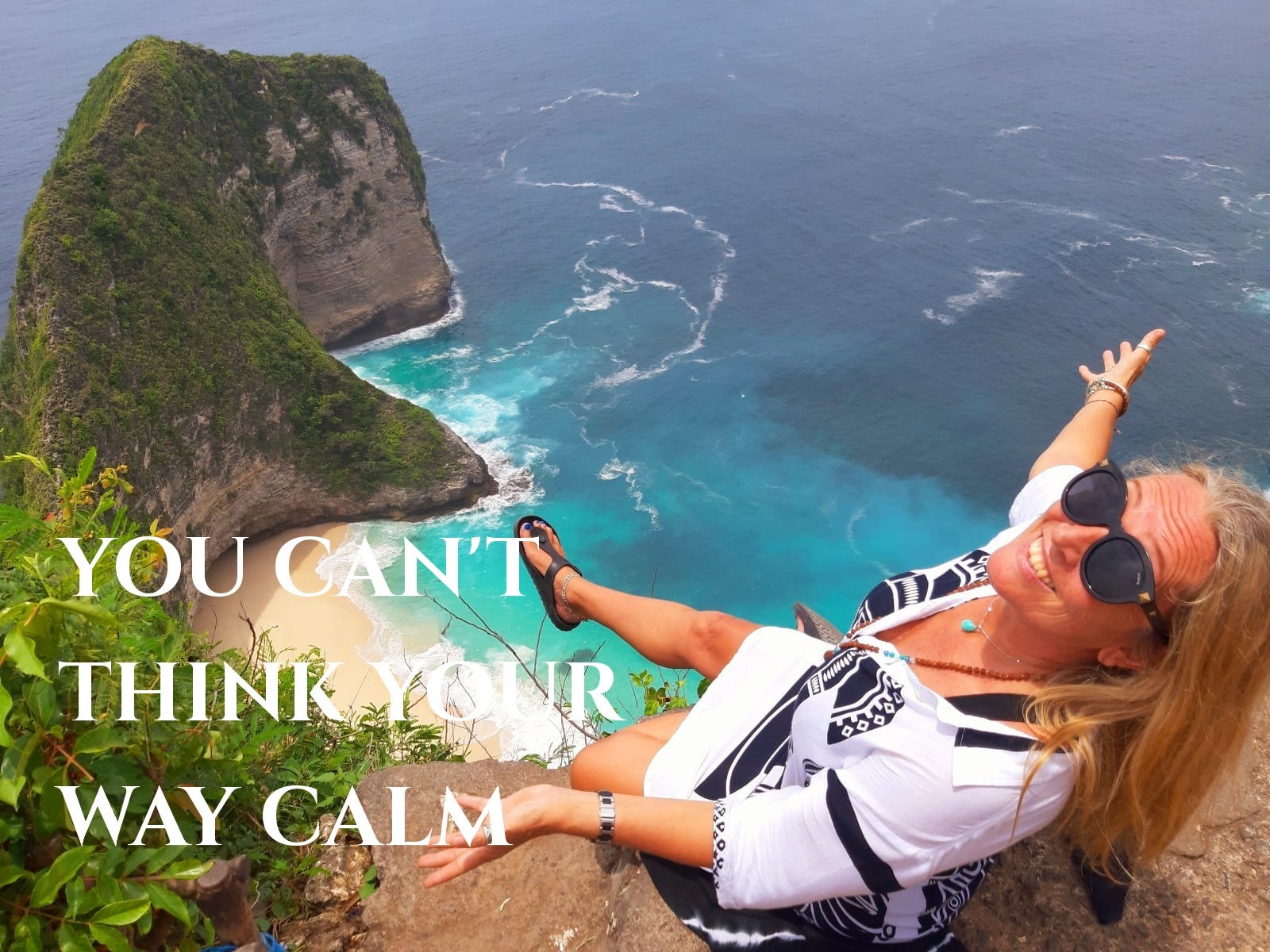
That’s why you can’t think your way calm. I’ve tried. You’ve tried. We all have. You tell yourself to relax and nothing happens, and then you feel like you’re failing at rest too. You’re not. Calm isn’t a decision you make in your head. It’s a state your body has to feel safe enough to drop into. The body goes first. The mind follows after.
Once I understood that, I stopped trying to force it and started giving my body the signals instead.
One of the things I love most is a 30 minute guided Yoga Nidra. It’s a deep relaxation you do lying down, fully supported, just following a voice while your body sinks. I don’t have to perform anything. I don’t have to get it right. I just let go, layer by layer, and by the end my whole system has quietly shifted gears. It’s one of the few things that reaches the places thinking never can. And many times I fall a sleep and get a good rest while the sub conscious mind still listens to the beautiful Yoga Nidra.
Yoga Nidra is my deeper reset, and not every day gives you half an hour in your busy life. So here are the two easiest ways I know to tell your body it’s safe, anywhere, in the middle of an ordinary day.
One. Breathe out longer than you breathe in. That’s it. A slow, loose exhale, longer than the breath in, is the most direct message of safety you can send yourself. It costs nothing and you can do it in a queue, in traffic, mid sentence. And while you do it, let a quiet line run underneath. I am safe. I am safe. I am safe. You’re giving your body the words and the breath at the same time, and the two together land deeper than either one alone. A few rounds of this and the brake starts to come on by itself.
Two. Slow your body down on purpose. This is the one I keep relearning. Walk slower. Move slower. Put something down instead of rushing to the next thing. When I let my body move at an easier pace, my mind takes the hint and follows. Speed tells your system something’s wrong. Slowness tells it you’re okay.
Neither of these is impressive. That’s the point. The body doesn’t need a grand gesture, it needs small, honest signals, repeated often.
And once those two feel natural, there are a few more small things I come back to, each one a quiet message of safety in its own way.
Sit with someone you truly feel safe with. Real safety is partly something we borrow from each other. One relaxed conversation with a person who feels like home can settle you faster than anything you do alone.
Stand barefoot in nature. Feet on grass, on sand, on the earth. Something about skin meeting ground tells the body it belongs here, it’s held, it can let go.
Hum, sing, or chant. It sounds almost too simple, but the vibration gently stimulates your vagus nerve, the long nerve that runs the brake. You already do it without thinking when you sigh out loud or hum in the kitchen. Do it on purpose and you’re working the calm system directly.
Lie down and rest your legs up the wall. A few minutes with your legs resting up a wall and your body flat cues the whole system to shift into calm. I do this at the end of a full day and I can feel the switch happen.
And if any of this feels familiar, it should. This is what the yoga tradition has been doing all along, long before anyone reached for the words nervous system. The slow breath. The stillness. The attention brought gently back into the body. It was never about looking peaceful. It was about reminding the body, over and over, that it’s safe to calm down now.
So here’s what I want to leave you with. Which one of these zings with you, the one you can already feel your body saying yes to. And what do you think would happen, not in a week, but over months, if you gave your nervous system that one small signal every single day.
You’re not broken. Your system is doing exactly what it was built to do. It just never got the message that the danger is over.
So give it the message. One slow breath out. I am safe. And let yourself move a little slower. That’s where it begins.
Until next time, stay curious and grateful.
Peace and joy,
Kim